
The number you're looking at is already old
Most food cost percentages are calculated once a month, after the accountant has reconciled invoices. By the time it lands in your inbox, the supplier who bumped chicken by 12% has already done it three more times.
That's not a reporting problem. It's a timing problem. The decisions that move margin happen on Tuesday afternoon, not at month end.
Where the drift actually comes from
Price creep is the obvious one, but it's rarely the biggest. Portion drift, recipe substitutions nobody wrote down, and invoices keyed in a week late all compound quietly. None of them show up as a single line you can point at.
The operators we see protecting margin aren't working harder. They're just seeing the problem the same week it starts.
What a live food cost looks like
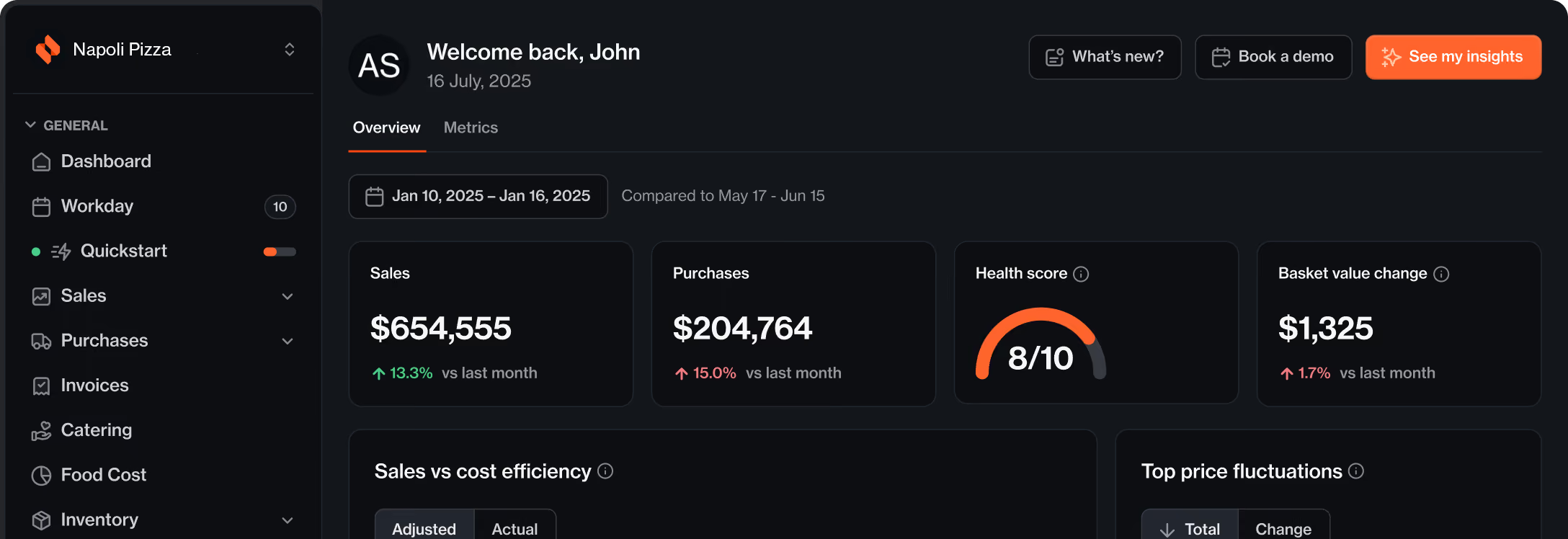
Every invoice scanned the day it arrives. Every recipe costed off the latest price, automatically. A theoretical cost per dish you can trust, sitting next to what you actually sold.
Start with your top ten dishes
You don't need every recipe costed on day one. Your top ten sellers usually carry most of your revenue and most of your risk. Cost those properly, watch them weekly, and you'll catch the majority of the drift.
"We weren't losing money on the dishes we thought. We were losing it on the specials nobody had costed."
The short version
Get invoices in the same day. Cost your top sellers. Check the gap between theoretical and actual once a week. That's the whole system, and it fits in the headspace you've got.