
Every industry report this year says the same thing: the middle is getting crushed.
The data backs it up, at first glance. Black Box Intelligence found 2026 sales growth concentrated at the two extremes of the market: premium dining, which is capturing the high-income guest, and quick-service value, which is capturing everyone trading down. The National Restaurant Association reports that 42% of operators weren't profitable in 2025, in an industry projected to hit $1.55 trillion in sales this year. And in July, 49% of operators reported lower traffic than a year earlier.
So the story writes itself. Guests are stretched, the middle has nowhere to hide, pick an end or die.
I don't buy it. Not all of it.
The middle isn't one thing
There's a band in the middle doing just fine. Better than fine. Mid-casual restaurants where the deal between the restaurant and the guest is so clear, and so frictionless, that it works like an unwritten alliance.
Here's the deal.
The restaurant promises a premium product that's well thought out. Wide influences, a real journey on the plate, but concise. The guest knows exactly what they're going to get, from the food and from the service. No frills. None of the old ceremony, and no tableside theater while you're mid-conversation. An easy, casual welcome.
The guest gets to focus on the thing they actually came for: the people at the table. I can take my grandma there. I can take my date there. I'm not threatened by the price, and I'm not threatened by the room.
That's the trade. The restaurant drops the performance, and the guest drops their guard.
It's not the format
Here's the part that surprised me. Both of these very recent stories are counter service. Who would've imagined.
Picture the first one. You're standing in line in 100-degree heat. Someone hands you an umbrella, because apparently that's part of the charm. Through the window, the dining room is sitting there, still empty. You finally reach the counter, order a full meal on your feet, and get upsold on everything short of the furniture. The prices are hard to justify. Then the screen swings around and asks for a tip before you've even found a seat, for service that hasn't happened yet.
You leave with a big hole in your pocket and no reason to come back. That's not hospitality. That's a toll booth.
Guests are keeping score on that tip screen, by the way. Popmenu found 35% of US diners have cut back on tipping this year, and the share of takeout orders that get a tip has dropped from 78% in 2022 to 62%.
Now take Loro in Austin. Same counter-service model, and it hits the bullseye.
On a busy night there's a wait. But there's an outdoor bar pouring frozen gin and tonics while you look over the menu, not a patronizing hipster admiring their own queue. Then you grab any seat you like, inside or out on the shaded patio, and browse the menu sitting down. Only then do you walk up and order. You drop a puck on your table, and the food finds you. Friends arriving at different times each order their own, so nobody wrestles over one check at the end of the night. Sit first, order second. That one detail tells you exactly who the night is for.
The food is a proper journey: Texas smoke meets Southeast Asian street food, from two James Beard Award winners. Oak-smoked brisket with chili gastrique and Thai herbs. Rice bowls from $13.95 to $17.95. A $15 lunch deal, a kids' menu, $5 slushies at happy hour, and dogs welcome on the patio.
Premium product. Concise menu. Zero ceremony. Bring your grandma or bring your date, and neither of them feels out of place, or out of pocket.
Same counter. Opposite night.
The format isn't the problem. The ego is.
Ego breaks the alliance
The alliance breaks the moment the restaurant pushes its ego into the picture. It happens two ways.
The first is the chef who decides how your night should go. The ceremony, the rules, the lecture about how the dish is meant to be eaten. That works at the top end, where the guest has signed up for the chef's vision and is paying for exactly that. In a mid-casual room it's just friction.
The second is price creep that isn't justified. Pushing a casual room into high-end pricing it hasn't earned, not on the service, not on the experience and not on the food. The guest feels it instantly, and the "I'm unthreatened here" feeling is gone. Honestly, I get angry just writing this.
Work with your ego and you're done.
What the winners do
The venues holding their ground aren't doing anything magic. They're doing four things, relentlessly:
- A super focused menu. A tight menu the guest can trust, not a sprawling one that tries to please everyone.
- A clear theme. The guest knows exactly what they're coming back for.
- Consistency. Tuesday lunch tastes like Saturday night. That's what "I know what I'm going to get" actually means, and it only happens when the specs, the prep and the costing behind every plate are locked down.
- Consistent prices. Fair, clear, no tricks at the till, and no surprises on the next visit.
Here's the kicker: price on its own is rarely the deal breaker. Inconsistency is.
The guests haven't gone anywhere. They're just choosing, much more carefully, who they trust with their night out.
Ego is so expensive, and guests have stopped paying for it.
Drop the ego. Build the alliance.
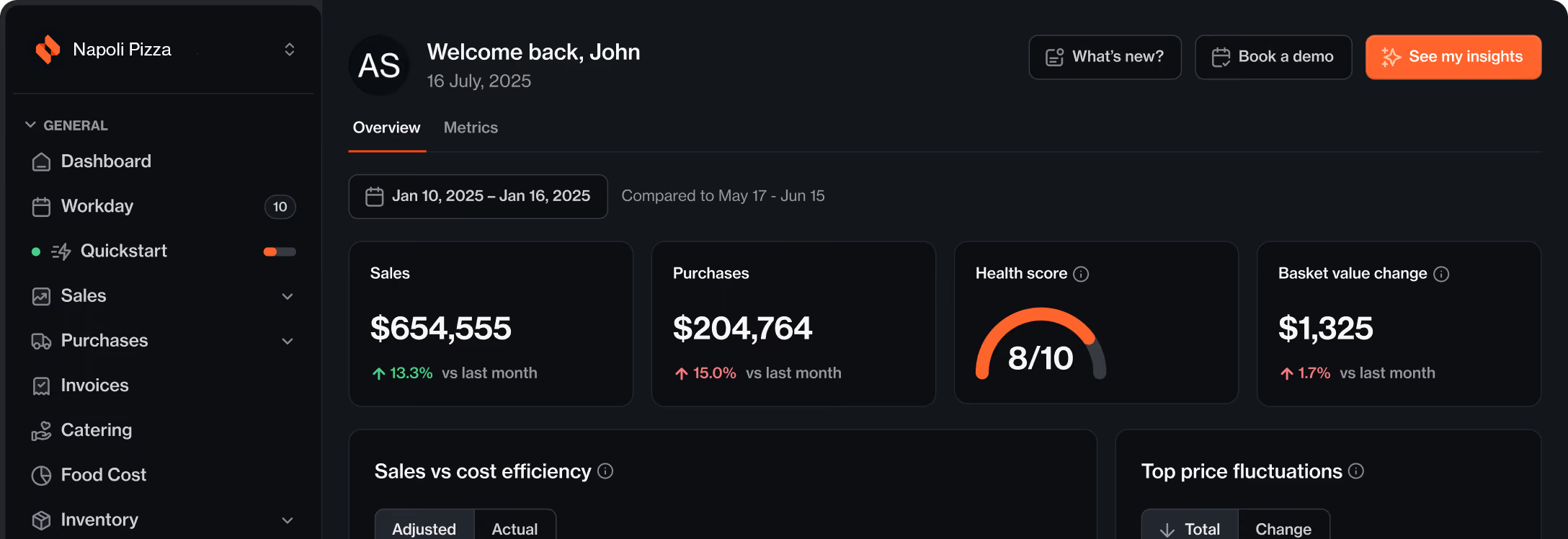
Consistency like that doesn't come from vibes. It comes from knowing your numbers on every plate, every shift. That's the job we built Restoke to do.