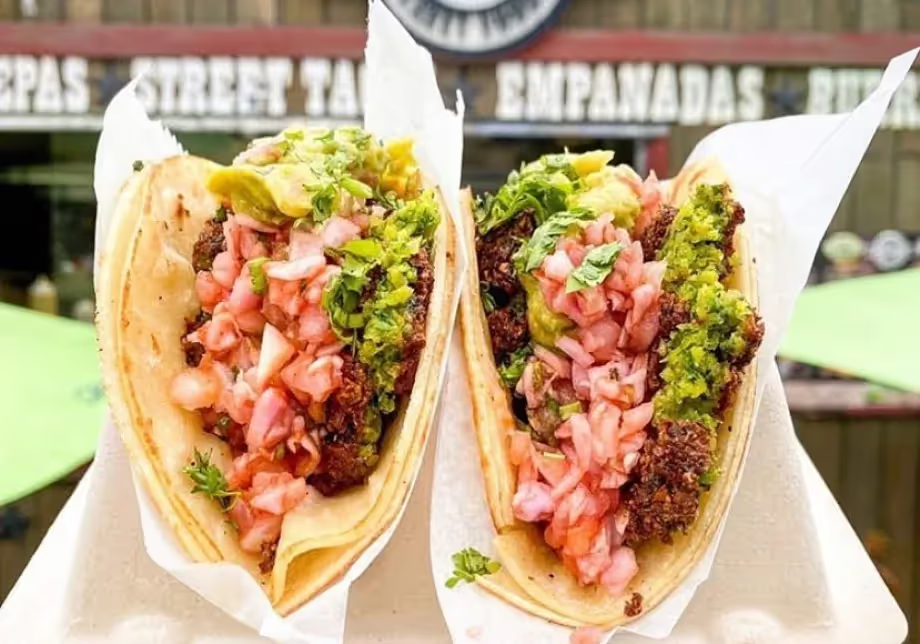

Royal Stacks is a Melbourne-born burger brand that opened its first store on Collins Street in 2016 and has grown to 13 venues, split between corporate sites and franchises. Beef is minced fresh daily, recipes are made in-house at every location, and there's nothing in the food that shouldn't be. Executive Chef Terri Tepp runs the food across the whole network.
Everything that makes Royal Stacks good also makes it hard to control. Fresh produce arrives daily, every venue preps its own recipes from scratch, and nothing is mass-produced, which means a lot of handling and a lot of room for waste. Across the network, wastage was sitting at around 4%. Terri and the head office team eventually had the numbers, but not early enough to do much about them — and no clear view of which venues were carrying the losses.
Royal Stacks came to Restoke through the industry. Once it was in, the daily wastage log became the habit that changed things: any team member can open the app and record waste in seconds, so it never falls to the manager alone. Head office runs weekly stocktakes across all sites, corporate and franchise, from a single view. Restoke also flags supplier price changes as invoices come in, so a cost jump gets picked up automatically rather than at the end of the month.
We're a Melbourne-based burger brand, and Restoke was created in Melbourne too. A lot of our friends and family in the industry were using it and highly recommended it to us. It was the right choice.

Terri Tepp
Executive Chef of Royal Stacks
Since introducing Restoke and having a better viewpoint — understanding our controllables, our wastage, how to order — we've been able to reduce our wastage to 0.5% across the board. It's been absolutely amazing.
With Restoke, Royal Stacks has reduced network wastage from 4% to 0.5% and now maintains it as a weekly target. Par levels are matched to actual sales, so venues aren't over-ordering or running short. When supplier prices move, the team sees it straight away and can act before it reaches the margin.
The bigger change is who's involved. Wastage is an open conversation for everyone rather than something that gets quietly absorbed. If fries are running high, the team works out together what needs to change — the station setup, the procedure, the training. Terri has even turned it into a bit of a competition between venues to see who can pull their waste down the furthest.
That's freed up head office too. With the daily chasing gone, Terri and her team spend their time at the venues supporting the network rather than tracking down numbers.
We've been able to get on the road a lot more and assist other venues within the network. We're not stuck in the day to day, chasing up what's happening with this stock or what our percentages are doing.
%20-%20Small.avif)